Thursday, September 12, 2013
2006 Mitsubishi Raider Review
 Pros: Muscular styling, gotta love the torquey V8
 Cons: Theyre overdoing the "tough guy" thing
The truck itself is great: Plenty of power for towing; solid, predictable ride. I also think it looks very good. Its based on the Dakota, but after seeing the Raider why would anyone want a Dakota?
What I dont like is the commercials. They kind of say: "Hey, are you an insecure weakling that needs to buy a big truck to feel tough? Weve got the tough-guy truck for you!"
It should be more like the (Mitsu) Lancer Evolution: understated (cept the wing), reasonably priced, mind-blowing performance.
Whats New for 2006
Based on the Dodge Dakota, the all-new midsize Raider brings a pickup back into Mitsubishis lineup (the last one was the 1996 Mighty Max). Like the Dakota, the Raider offers extended- and crew-cab body styles and a choice of V6 or V8 power.
Powertrains and Performance:
Two engines are available: a 3.7-liter V6 that makes 210 horsepower and 235 pound-feet of torque and a 4.7-liter V8 that produces 230 hp and 290 lb-ft of torque. The V6 takes either a six-speed manual or a four-speed automatic, while the V8 is available with the manual or a five-speed automatic. The LS and DuroCross offer the usual 2WD and part-time 4WD configurations, while the XLS can be equipped with 2WD or a full-time 4WD system. Towing capacity is 6,500 pounds.
Body Styles, Trim Levels and Options:
The midsize Raider comes in two body styles. The extended cab has rear-opening access doors and a 6-foot-6 bed, while the more spacious crew cab (called Double Cab) has four full-size doors and a 5-foot-4 bed. There are three trim levels: LS, DuroCross and XLS. LS extended cabs come with the basics, including a front bench seat, air conditioning, a CD player and tinted glass; LS Double Cabs add power windows and locks, keyless entry and cruise control (optional on the extended cab). Midlevel DuroCross models get 16-inch alloy wheels, Bluetooth connectivity, heavy-duty cooling, a leather-wrapped steering wheel, power everything, heated mirrors and bucket seats; 4WD versions get all-terrain tires, a raised ride height, firmer shocks, skid plates and a limited-slip differential. Add a V8 to your DuroCross and youll also get a power driver seat and Bluetooth. Available as Double Cabs only, top-end XLS models provide 17-inch chrome wheels, an Alpine sound system, satellite radio, leather upholstery and seat heaters.
Interior Design and Special Features:
Inside, the driving position feels more carlike than youd expect, with simple, easy-to-reach controls. Aluminum trim and white-faced gauges give the cabin some style, but materials quality is unimpressive next to the refined Toyota Tacoma. Cabins are spacious, but the Double Cab is a must if youre carrying four adults.
Safety:
Rear-wheel ABS is standard on the Raider; four-wheel ABS is optional on the XLS only. Front-seat side airbags and full-length side curtain airbags are also available, but again only on the XLS. In NHTSA frontal-impact crash tests, the extended-cab version of the Raiders twin, the Dakota, earned a perfect five stars for driver protection and four stars for front-passenger protection; the crew-cab Dakota earned five stars for both. In side-impact testing, the extended cab also earned five stars, and both the extended- and crew-cab versions earned a four-star rollover rating. The Dakota scored an "Acceptable" rating (second best) in IIHS frontal-offset crash testing.
Driving Impressions:
The Raider is quiet inside at any speed, with ample insulation from wind and road noise. The exhaust emits a hint of a grumble, which turns into a throaty roar when you stomp on the go-pedal in V8-equipped Raiders. The chassis feels very stable, and while the ride is taut, it soaks up ruts and bumps with ease. Handling is excellent on- or off-road, and the trucks shift-on-the-fly four-wheel-drive system offers plenty of traction on rough terrain.

Wednesday, September 11, 2013
Volvo 960 The Volvo 760’s Replacement
 Going back to the autumn of the year 1990, people would be able to recognize that it was during this time and season that the world came to know the Volvo 960. During that introduction for the vehicle, the Volvo 960 was introduced as a 1991 year model. It was also launched alongside the Volvo 940. It was marketed as the replacement for the then defunct Volvo 760. It lived for quite sometime.
This vehicle was known as the Volvo S90 and the Volvo V90 for the last two years of its existence. And in the year 1998, production for this vehicle was entirely halted.
These vehicles were actually built in Kalmar in Sweden. The very first Volvo 960 was actually completed and came out to the streets on the 12th of August in 1991. It was then packaged as a 1992 year model. Starting from 1995 up until a year before its last production, the Volvo 960s were built in another location. This time, it was in Goteborg, Sweden.
It was in June 27th of 1994 that the very first one from this location came out to do some rolling on the streets.
In the United States, the Volvo 960 parts were equipped with an electronically controlled Asin Warner automatic gearbox. As per those that were marketed in Europe, these came with 2.5 liter engines combined with a manual gearbox that was called as the M90.
These vehicles were actually a range of rear wheel drive cars. They were crafted and specifically built so as to cater to the tastes, preferences, and appeal of the buyers from the United States. By doing such, the Volvo 960 was one of the cars that paved the way for Volvo to enter and expand its market in North America. This vehicle has been made available in two versions which comprised of the sedan which held four doors and the estate car which boasted of five doors.
As for the Volvo 960s marketed in the United States, these actually got their power from an all new in line 6 cylinder block with double overhead camshafts. The engine was a DOHC unit. Each of the cylinders had four valves. It was an advanced engine during that time.
Carefully selected from outstanding Volvo car parts, http://www.carpartsone.com/ products are guaranteed to be of the highest quality and the best in durability. Interested parties, Volvo aficionados and Volvo owners can visit this online store’s collection. One could find a huge selection of Volvo parts for all models including Volvo 960 parts. There are stocks of thousands of Volvo parts for all enthusiasts. Find OEM Volvo auto parts, remanufactured parts, new aftermarket parts, used parts, Volvo performance parts and more from this store. From a/c condensers to alternators, front bumpers, catalytic converters, starters and wheels and much more, interested parties could browse through the site and find them there.
Tuesday, September 10, 2013
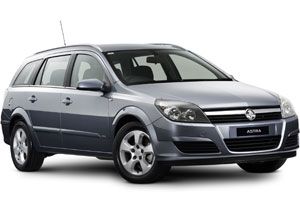
Holden AH Astra Wagon
A popular seller overseas, the AH Astra wagon is the first Astra wagon released in Australia which might explain why it generated as much interest on test as some of this years big new releases. As an upmarket front-drive wagon alternative to the flood of small SUVs, it threatens to deliver the same amenity with saving of up to $10,000 and at the bowser.
The 2005 cut in import duty has reduced the tariff advantage of a 4WD wagon over a two-wheel drive wagon like the Astra to just five per cent, the closest it has ever been for an imported wagon.
The starting price for the Astra CD Wagon is $23,490 plus $2000 for the auto. The only "must have" feature missing is cruise control which is a $200 dealer fit option. Otherwise, the standard kit is impressive including cargo cover, ABS, front and side airbags, front power windows, steering wheel audio controls, single CD sound with seven speakers, height and reach steering column adjustment, multi-function display including ambient temperature, drivers seat height adjustment, electric mirrors and air-conditioning.
That said, everything great about the Astra wagon is on offer in even the most basic version so there is no need to spend the extra unless there is a good deal on offer.
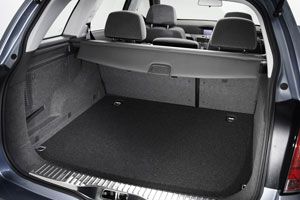
Looks are important to this market. The consensus is that the Astra disguises its long 2.7 metre wheelbase (89mm longer than the hatch) and 40mm of extra height well. The extra ride height at the rear and slimmer tail lights that dont cut into the rear liftback aperture are useful gains over the hatchback for serious loads. Clever design and an easy folding rear seat allows all of the rear load area to be quickly accessed and used. The cargo blind with its one touch release handle is outstanding as is the cargo area side storage bin with its own elasticized load restraint. The strong standard roof rails designed for a wide range of carrying accessories are an important consideration in this market.
It comes as a shock to most people that this Astra wagon is about 240mm longer than a 1963 Holden EH wagon on a longer wheelbase and is significantly wider. Legroom and luggage capacity are therefore impressive while cabin width feels about the same when todays doors and side pillars are almost twice as deep as they were in 1963 for substantial side impact protection. No wonder so many Europeans see the Astra wagon as a smart family car.
The Astra wagon gets the thumbs-up from passengers. The deep back seat with its three head restraints, three retracting lap-sash seatbelts, rear seat-mounted child restraint tether points and rear heater ducts offers passenger car comfort and safety with legroom to spare. Holden engineers have tuned the suspension well delivering exceptional ride and control over broken and dirt surfaces for a small wagon. The only down side is the high window line that blocks vision for children in the rear seat.
The 1.8lt engine is adequate for most drivers. The engine delivers ninety per cent of its maximum torque between 2200 and 5500rpm which is more than can be said for some of its 2.0lt rivals. It wasnt so long ago that the 90kW (92kW on premium unleaded) Astras power output was a healthy figure for a 2.0-2.2lt engine.
In addition to the power advantage, we also found that running it on premium unleaded improved fuel economy. This is to be expected with a European engine designed for 95 RON. Several tanks tests confirmed that Holdens fuel economy figure of 8.3 litres/100 km is achievable.
What lets the Astra down is its four-speed automatic transmission. Like so many Europeans, it has a tall overdrive fourth for frugal flat out autobahn cruising and three lower ratios for crowded cities. The gap between them is exactly where most Australians drive. At least the Sports mode locks it out if you need to travel in a 50km/h speed zone.
In dense traffic conditions, the Astra is strong and lively yet in the intermediate 60-90km/h speed ranges it struggles to deliver a suitable ratio for overtaking and merging. The Astra is not alone and it only needs a quick spin in a small engined Saab, VW or Audi with a five-speed auto to realize that an extra ratio might be more useful than a power increase and loss in fuel economy.
The auto seems to disguise the delayed throttle response that mars the enjoyment of the manual version. The auto selector is very firm and clunky and discourages the manual shifting of the latest sequential shift modes.
Some pundits found the Astra dash imposing and bland, restricting vision for shorter drivers. It also narrows the front footwells restricting sideways stretching room for the legs of tall drivers on a long trip yet it is not as bad in this area as the new Ford Focus. The front seats are initially firm but very good over long distances.
The vertical power socket makes little sense when it is so close to the centre control panel. Indeed, despite the massive dash, there is nowhere to put phones, sunglasses, keys, even the most basic items.
In fact, the controls for the whole car suffer from the same gap between user and end result. Even after a week, I challenge anyone to know exactly what they have selected while activating the Astras wiper or indicator stalks. There are no discernible detents and what happens seems to be a random event. If this is the price of moving the indicator stalk to the correct side, give me the old Astra any day.
Overall the Astra wagon still leaves its Korean and Japanese rivals some way behind. It punches way above its weight in terms of ride and handling, usable space, comfort, quality, safety and body integrity but the state of the art driver involvement and precision expected from its European ancestry are just not there. Ironically, in some areas even Holdens new (and cheaper) Viva wagon is a more obedient and willing servant when you are behind the wheel.
source :carpoint.ninemsn.com.au
Monday, September 9, 2013
2001 Acura Integra Reviews Specs
 The handling on this car is exceptional. straight line acceleration is just ok. but is straight line driving real driving? anyone can hit the gas. this will shame any car in a high speed bend that is not 4wd. of course a non driving buffoon wouldnt know anything about a high speed bend. all a buffoon would know about is torque.
This car will stop on a dime and give you back change. only an idiot will rate performance low. someone who knows nothing about cars. this is a car for drivers.
Many aftermarket parts to make this car look and perform even better. Seems to be reliable, you can rev the engine hard and not have to worry about blowing the engine. It has the GS-R based suspension finally! Its an ACURA!!!
Interior Design and Special Features
The Integra coupe can seat two people in the rear; the sedan can hold up to three. Like most sport hatchbacks, the coupes rear seat is best suited for children or those of smaller stature. Drivers are greeted with easy-to-read gauges, high quality controls and, on manual transmission-equipped cars, a precision shifter. The overall design is dated when viewed alongside those found in newer, competing vehicles, and certain elements, like cupholder placement and sound system controls, suffer from poor ergonomics.
Safety
The Integra comes standard with dual front airbags and antilock brakes. Outboard rear passengers get three-point belts; the center rear position in the sedan has a lap belt only. Side airbags arent available. In NHTSA crash testing, the Integra received a four-star rating (out of a possible five) for its protection of the driver in frontal impacts. The front passenger position received three stars. Side-impact and frontal-offset crash tests havent been preformed.
Powertrains and Performance
LS and GS come with a 1.8-liter four-cylinder engine. It makes 140 hp and 124 lb-ft of torque. A five-speed manual transmission is standard with this engine, and a four-speed automatic is optional. The GS-R also has a 1.8-liter engine but with more power: 170 hp and 128 lb-ft of torque. The automatic transmission isnt offered for the GS-R, nor is it available on the high performance Type R. The Type Rs engine is similar to the GS-Rs but, through substantial tuning modifications, makes 195 hp. It comes mated to a close-ratio five-speed manual with a limited-slip differential. None of these engines are particularly torquey, but they are fuel efficient; LS, GS and GS-R manual transmission-equipped cars earn an EPA estimate of 25/31 mpg city/highway.
Body Styles, Trim Levels and Options
The Acura Integra is sold as a two-door coupe or four-door sedan, though technically both offer a hatchback rear door. The sedan is a bit longer than the coupe and provides extra room for rear-seat passengers. For each body style, there are three main trim levels available -- LS, GS and GS-R. A fourth trim level, the Type R, is only available as a coupe. The LS, GS and GS-R come with standard features like 15-inch wheels; power windows, locks and mirrors; cruise control; air conditioning; a CD player and a moonroof. The GS and GS-R also have a leather-trimmed interior. The Type R takes a more austere path. Though air conditioning is standard (in previous years, it wasnt), it does have a number of performance-enhancing changes, such as reduced sound deadening material, additional structural bracing, larger brakes, a race-tuned suspension, performance tires and aerodynamic enhancements (i.e., a big honkin rear wing).
Driving Impressions
The Integra steers crisply and always feels connected to the road. With only 2,600 pounds of car to propel, the standard power plant delivers decent performance. But we love the urgency--and high-tech sound--of the wonderful VTEC engine. Thats why we chose a GS-R for this evaluation.
The GS-R claws to 60 mph in a little more than eight seconds, emitting a determined, high-tech snarl in the process. The five-speed gearbox shifts precisely. The foot-pedal layout encourages heel-and-toe downshifting and the variable-assist power steering provides just the right blend of effort and road feel.
Like all Acura and Honda automobiles, the Integra employs Hondas control arm suspension system, with common spring and damping rates right across the board. Handling response is quick and precise. Yet the ride quality is comforable. That may be one of the reasons for the Integras ongoing popularity: It is sporty, without being harsh. The suspension compliance that goes with a relatively smooth ride, by sporty car standards, shows up as body roll in really hard cornering, and we know from driving at the limit on various race tracks that the GS-R isnt quite as agile as the Honda Prelude.
On a race track the Integra tends toward understeer, but this is easily managed by lifting off the throttle or trail-braking into tight corners, to transfer grip to the front tires and allow the rear end to rotate outward. Body roll limits cornering potential to just below that of the Prelude. The payoff for this concession is superb ride quality. The suspension feels firm, but never jarring. The steering strikes an ideal balance between power assist and sufficient road feel. Your daily rounds probably include a lot more commuting than autocross maneuvers, and feeling every pothole and tar strip isnt really that much fun.
Yet when its time to let the tachometer wind up on a sinuous country road, the GS-R gives a great account of itself with performance that is superior to what most sport coupes in this size class offer. That its able to do so without making the owner suffer in everyday driving is a tribute to the suspension engineers.
If you dislike these compromises, theres always the Integra Type R. Add 25 hp to the GS-R package, take away most of the compromises generally made for passenger comfort, and you have an almost-race-ready screamer thats just born to be wild. Integra Type Rs torque peak comes on at 7500 rpm (thats torque, not horsepower), while horsepower, all 195 of it, tops out at a dizzying 8000 rpm. Thats a high-revving motor. That output works out to more than 108 horsepower per liter, a power-to-weight ratio no other normally aspirated car can match. The Type R rides harder as well, on a uniquely tuned suspension thats lowered 15 mm.
The slightly outrageous Type R is just about the hottest thing going in this class, but its not for everyone. Carefully consider the compromises it demands before signing on the dotted line.
Not surprisingly, the essential strengths of the Integra have made it a favorite with a new breed of young enthusiasts who modify compact performance cars--instead of the time-honored approach involving small block Chevy V8s. This is a remarkable trend, one that has launched magazines and a major aftermarket industry that supplies all sorts of go-fast and appearance goodies. While hot-rodding may not be your goal, being a hot-rodders favorite speaks positive volumes about the Integra. Show-car builders like it as a starting point because its basic styling will look contemporary for a long time. Street racers are attracted to a driveline that just wont break, no matter how much horsepower they add.
What does this have to do with you? Maybe nothing. But it does suggest that Honda has created something special here. And with or without the endorsement of the new breed of hot rodders, we still think this is a great buy in a small sporty car.
Favorite Features
Engine responsiveness, gas economy, great handling, and smooth ride.
Overall Review
The Integra Type R delivers ample power through its 195HP DOHC VTEC engine which is able to propel its 2600lb. body from 0-60 in 6.1sec and the 1/4 mile in 14.7sec. Impressive for a 4cyl, and a 1.8L no less so you get great fuel economy when you feel like driving with less than maximum effort. The suspension on the Type R has been tuned to perfection and has been hailed by numerous sources as the best FWD handling car in the world with slalom speeds that rival Ferraris and Porsches.
Kelley Blue Book Price $10,200 - $17,300
Sunday, September 8, 2013
What You Should Know Before You Buy A Truck
 Size/Market Segment: Most trucks fall into either the compact or full-size category, although there are a few models designated as midsize.
 Price: Base model compact trucks are some of the cheapest vehicles on the market, but loaded premium models can run into the low $30Ks. Full-size trucks range from the low-$20Ks to the low $50Ks.
Engine/Fuel Economy: Compact trucks offer four-, five- and six-cylinder engines that deliver respectable mileage. Full-size trucks offer six-cylinder engines on base models, but most trucks use V8 or even V10 engines that return marginal fuel economy numbers at best. Most full-size trucks also offer diesel engines that provide plenty of towing power and better mileage.
Safety: Most trucks offer basic safety equipment like front airbags and seatbelts for all passengers. Some newer full-size trucks offer more advanced systems like side curtain airbags and stability control.
Drivetrain: Almost all trucks offer both manual and automatic transmissions, as well as two- and four-wheel drive. Many vehicles also offer traction-aiding devices like limited-slip/locking differentials and electronic traction control.
Passenger Capacity/Interior Space: There are three basic body styles for trucks: regular cab, extended cab and crew cab. Regular cabs have two doors and seat between two and three comfortably. Compact extended cabs add mostly extra storage space, while full-size versions can seat three additional passengers. Rear clamshell doors make it easier to get people and cargo in and out of the back of extended cabs. Crew cabs have four full-size doors and seat between five and six passengers comfortably.
Versatility of Interior Seating: Most trucks with extended or crew cabs offer the ability to either fold the entire rear seat up or at least one half or the other. Some newer full-size trucks also allow you to fold the front-passenger seat flat to provide a handy tablelike surface.
Towing Ability: Compact trucks can tow between 3,000 and 7,000 pounds, depending on how theyre equipped. Full-size trucks can tow as much as 12,000 pounds with certain engines and suspension configurations, although most range between 8,000- and 10,000-pound capacities.
Bed Capacity and Conveniences: Most compact truck beds are 6 1/2 feet long, although a few models offer longer beds. Almost all full-size trucks offer long and short beds that range between 6 1/2 and 8 feet long depending on the brand and/or cab configuration. A few models offer a spray-in bedliner, a cargo light and adjustable tie-downs as factory options. Built-in storage compartments are another convenience to keep an eye out for as youre shopping.
Operating Costs: Compact trucks are relatively fuel-efficient and cheaper to insure because of their low buy-in cost. As you add size and cylinders, expect a corresponding increase in fuel and insurance costs. Adding four-wheel drive to any truck will add to annual operating costs as well.