Pages

Thursday, September 12, 2013

2006 Mitsubishi Raider Review

Pros: Muscular styling, gotta love the torquey V8

Cons: Theyre overdoing the "tough guy" thing


The truck itself is great: Plenty of power for towing; solid, predictable ride. I also think it looks very good. Its based on the Dakota, but after seeing the Raider why would anyone want a Dakota?


What I dont like is the commercials. They kind of say: "Hey, are you an insecure weakling that needs to buy a big truck to feel tough? Weve got the tough-guy truck for you!"
It should be more like the (Mitsu) Lancer Evolution: understated (cept the wing), reasonably priced, mind-blowing performance.

Whats New for 2006

Based on the Dodge Dakota, the all-new midsize Raider brings a pickup back into Mitsubishis lineup (the last one was the 1996 Mighty Max). Like the Dakota, the Raider offers extended- and crew-cab body styles and a choice of V6 or V8 power.

Powertrains and Performance:

Two engines are available: a 3.7-liter V6 that makes 210 horsepower and 235 pound-feet of torque and a 4.7-liter V8 that produces 230 hp and 290 lb-ft of torque. The V6 takes either a six-speed manual or a four-speed automatic, while the V8 is available with the manual or a five-speed automatic. The LS and DuroCross offer the usual 2WD and part-time 4WD configurations, while the XLS can be equipped with 2WD or a full-time 4WD system. Towing capacity is 6,500 pounds.

Body Styles, Trim Levels and Options:

The midsize Raider comes in two body styles. The extended cab has rear-opening access doors and a 6-foot-6 bed, while the more spacious crew cab (called Double Cab) has four full-size doors and a 5-foot-4 bed. There are three trim levels: LS, DuroCross and XLS. LS extended cabs come with the basics, including a front bench seat, air conditioning, a CD player and tinted glass; LS Double Cabs add power windows and locks, keyless entry and cruise control (optional on the extended cab). Midlevel DuroCross models get 16-inch alloy wheels, Bluetooth connectivity, heavy-duty cooling, a leather-wrapped steering wheel, power everything, heated mirrors and bucket seats; 4WD versions get all-terrain tires, a raised ride height, firmer shocks, skid plates and a limited-slip differential. Add a V8 to your DuroCross and youll also get a power driver seat and Bluetooth. Available as Double Cabs only, top-end XLS models provide 17-inch chrome wheels, an Alpine sound system, satellite radio, leather upholstery and seat heaters.

Interior Design and Special Features:

Inside, the driving position feels more carlike than youd expect, with simple, easy-to-reach controls. Aluminum trim and white-faced gauges give the cabin some style, but materials quality is unimpressive next to the refined Toyota Tacoma. Cabins are spacious, but the Double Cab is a must if youre carrying four adults.

Safety:

Rear-wheel ABS is standard on the Raider; four-wheel ABS is optional on the XLS only. Front-seat side airbags and full-length side curtain airbags are also available, but again only on the XLS. In NHTSA frontal-impact crash tests, the extended-cab version of the Raiders twin, the Dakota, earned a perfect five stars for driver protection and four stars for front-passenger protection; the crew-cab Dakota earned five stars for both. In side-impact testing, the extended cab also earned five stars, and both the extended- and crew-cab versions earned a four-star rollover rating. The Dakota scored an "Acceptable" rating (second best) in IIHS frontal-offset crash testing.

Driving Impressions:

The Raider is quiet inside at any speed, with ample insulation from wind and road noise. The exhaust emits a hint of a grumble, which turns into a throaty roar when you stomp on the go-pedal in V8-equipped Raiders. The chassis feels very stable, and while the ride is taut, it soaks up ruts and bumps with ease. Handling is excellent on- or off-road, and the trucks shift-on-the-fly four-wheel-drive system offers plenty of traction on rough terrain.

Wednesday, September 11, 2013

Volvo 960 The Volvo 760’s Replacement

Going back to the autumn of the year 1990, people would be able to recognize that it was during this time and season that the world came to know the Volvo 960. During that introduction for the vehicle, the Volvo 960 was introduced as a 1991 year model. It was also launched alongside the Volvo 940. It was marketed as the replacement for the then defunct Volvo 760. It lived for quite sometime.
This vehicle was known as the Volvo S90 and the Volvo V90 for the last two years of its existence. And in the year 1998, production for this vehicle was entirely halted.
These vehicles were actually built in Kalmar in Sweden. The very first Volvo 960 was actually completed and came out to the streets on the 12th of August in 1991. It was then packaged as a 1992 year model. Starting from 1995 up until a year before its last production, the Volvo 960s were built in another location. This time, it was in Goteborg, Sweden.


It was in June 27th of 1994 that the very first one from this location came out to do some rolling on the streets.

In the United States, the Volvo 960 parts were equipped with an electronically controlled Asin Warner automatic gearbox. As per those that were marketed in Europe, these came with 2.5 liter engines combined with a manual gearbox that was called as the M90.

These vehicles were actually a range of rear wheel drive cars. They were crafted and specifically built so as to cater to the tastes, preferences, and appeal of the buyers from the United States. By doing such, the Volvo 960 was one of the cars that paved the way for Volvo to enter and expand its market in North America. This vehicle has been made available in two versions which comprised of the sedan which held four doors and the estate car which boasted of five doors.

As for the Volvo 960s marketed in the United States, these actually got their power from an all new in line 6 cylinder block with double overhead camshafts. The engine was a DOHC unit. Each of the cylinders had four valves. It was an advanced engine during that time.

Carefully selected from outstanding Volvo car parts, http://www.carpartsone.com/ products are guaranteed to be of the highest quality and the best in durability. Interested parties, Volvo aficionados and Volvo owners can visit this online store’s collection. One could find a huge selection of Volvo parts for all models including Volvo 960 parts. There are stocks of thousands of Volvo parts for all enthusiasts. Find OEM Volvo auto parts, remanufactured parts, new aftermarket parts, used parts, Volvo performance parts and more from this store. From a/c condensers to alternators, front bumpers, catalytic converters, starters and wheels and much more, interested parties could browse through the site and find them there.

Tuesday, September 10, 2013

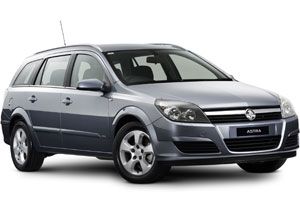
Holden AH Astra Wagon

A popular seller overseas, the AH Astra wagon is the first Astra wagon released in Australia which might explain why it generated as much interest on test as some of this years big new releases. As an upmarket front-drive wagon alternative to the flood of small SUVs, it threatens to deliver the same amenity with saving of up to $10,000 and at the bowser.

Image hosted by Photobucket.com


The 2005 cut in import duty has reduced the tariff advantage of a 4WD wagon over a two-wheel drive wagon like the Astra to just five per cent, the closest it has ever been for an imported wagon.

The starting price for the Astra CD Wagon is $23,490 plus $2000 for the auto. The only "must have" feature missing is cruise control which is a $200 dealer fit option. Otherwise, the standard kit is impressive including cargo cover, ABS, front and side airbags, front power windows, steering wheel audio controls, single CD sound with seven speakers, height and reach steering column adjustment, multi-function display including ambient temperature, drivers seat height adjustment, electric mirrors and air-conditioning.


That said, everything great about the Astra wagon is on offer in even the most basic version so there is no need to spend the extra unless there is a good deal on offer.


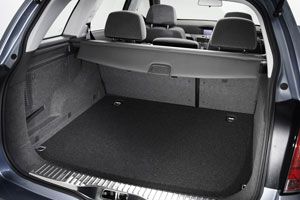
Looks are important to this market. The consensus is that the Astra disguises its long 2.7 metre wheelbase (89mm longer than the hatch) and 40mm of extra height well. The extra ride height at the rear and slimmer tail lights that dont cut into the rear liftback aperture are useful gains over the hatchback for serious loads. Clever design and an easy folding rear seat allows all of the rear load area to be quickly accessed and used. The cargo blind with its one touch release handle is outstanding as is the cargo area side storage bin with its own elasticized load restraint. The strong standard roof rails designed for a wide range of carrying accessories are an important consideration in this market.


It comes as a shock to most people that this Astra wagon is about 240mm longer than a 1963 Holden EH wagon on a longer wheelbase and is significantly wider. Legroom and luggage capacity are therefore impressive while cabin width feels about the same when todays doors and side pillars are almost twice as deep as they were in 1963 for substantial side impact protection. No wonder so many Europeans see the Astra wagon as a smart family car.


The Astra wagon gets the thumbs-up from passengers. The deep back seat with its three head restraints, three retracting lap-sash seatbelts, rear seat-mounted child restraint tether points and rear heater ducts offers passenger car comfort and safety with legroom to spare. Holden engineers have tuned the suspension well delivering exceptional ride and control over broken and dirt surfaces for a small wagon. The only down side is the high window line that blocks vision for children in the rear seat.


The 1.8lt engine is adequate for most drivers. The engine delivers ninety per cent of its maximum torque between 2200 and 5500rpm which is more than can be said for some of its 2.0lt rivals. It wasnt so long ago that the 90kW (92kW on premium unleaded) Astras power output was a healthy figure for a 2.0-2.2lt engine.


In addition to the power advantage, we also found that running it on premium unleaded improved fuel economy. This is to be expected with a European engine designed for 95 RON. Several tanks tests confirmed that Holdens fuel economy figure of 8.3 litres/100 km is achievable.


What lets the Astra down is its four-speed automatic transmission. Like so many Europeans, it has a tall overdrive fourth for frugal flat out autobahn cruising and three lower ratios for crowded cities. The gap between them is exactly where most Australians drive. At least the Sports mode locks it out if you need to travel in a 50km/h speed zone.


In dense traffic conditions, the Astra is strong and lively yet in the intermediate 60-90km/h speed ranges it struggles to deliver a suitable ratio for overtaking and merging. The Astra is not alone and it only needs a quick spin in a small engined Saab, VW or Audi with a five-speed auto to realize that an extra ratio might be more useful than a power increase and loss in fuel economy.


The auto seems to disguise the delayed throttle response that mars the enjoyment of the manual version. The auto selector is very firm and clunky and discourages the manual shifting of the latest sequential shift modes.


Some pundits found the Astra dash imposing and bland, restricting vision for shorter drivers. It also narrows the front footwells restricting sideways stretching room for the legs of tall drivers on a long trip yet it is not as bad in this area as the new Ford Focus. The front seats are initially firm but very good over long distances.

Image hosted by Photobucket.com


The vertical power socket makes little sense when it is so close to the centre control panel. Indeed, despite the massive dash, there is nowhere to put phones, sunglasses, keys, even the most basic items.


In fact, the controls for the whole car suffer from the same gap between user and end result. Even after a week, I challenge anyone to know exactly what they have selected while activating the Astras wiper or indicator stalks. There are no discernible detents and what happens seems to be a random event. If this is the price of moving the indicator stalk to the correct side, give me the old Astra any day.


Overall the Astra wagon still leaves its Korean and Japanese rivals some way behind. It punches way above its weight in terms of ride and handling, usable space, comfort, quality, safety and body integrity but the state of the art driver involvement and precision expected from its European ancestry are just not there. Ironically, in some areas even Holdens new (and cheaper) Viva wagon is a more obedient and willing servant when you are behind the wheel.

source :carpoint.ninemsn.com.au

Monday, September 9, 2013

2001 Acura Integra Reviews Specs

The handling on this car is exceptional. straight line acceleration is just ok. but is straight line driving real driving? anyone can hit the gas. this will shame any car in a high speed bend that is not 4wd. of course a non driving buffoon wouldnt know anything about a high speed bend. all a buffoon would know about is torque.


This car will stop on a dime and give you back change. only an idiot will rate performance low. someone who knows nothing about cars. this is a car for drivers.

Many aftermarket parts to make this car look and perform even better. Seems to be reliable, you can rev the engine hard and not have to worry about blowing the engine. It has the GS-R based suspension finally! Its an ACURA!!!

Interior Design and Special Features

The Integra coupe can seat two people in the rear; the sedan can hold up to three. Like most sport hatchbacks, the coupes rear seat is best suited for children or those of smaller stature. Drivers are greeted with easy-to-read gauges, high quality controls and, on manual transmission-equipped cars, a precision shifter. The overall design is dated when viewed alongside those found in newer, competing vehicles, and certain elements, like cupholder placement and sound system controls, suffer from poor ergonomics.

Safety

The Integra comes standard with dual front airbags and antilock brakes. Outboard rear passengers get three-point belts; the center rear position in the sedan has a lap belt only. Side airbags arent available. In NHTSA crash testing, the Integra received a four-star rating (out of a possible five) for its protection of the driver in frontal impacts. The front passenger position received three stars. Side-impact and frontal-offset crash tests havent been preformed.

Powertrains and Performance

LS and GS come with a 1.8-liter four-cylinder engine. It makes 140 hp and 124 lb-ft of torque. A five-speed manual transmission is standard with this engine, and a four-speed automatic is optional. The GS-R also has a 1.8-liter engine but with more power: 170 hp and 128 lb-ft of torque. The automatic transmission isnt offered for the GS-R, nor is it available on the high performance Type R. The Type Rs engine is similar to the GS-Rs but, through substantial tuning modifications, makes 195 hp. It comes mated to a close-ratio five-speed manual with a limited-slip differential. None of these engines are particularly torquey, but they are fuel efficient; LS, GS and GS-R manual transmission-equipped cars earn an EPA estimate of 25/31 mpg city/highway.

Body Styles, Trim Levels and Options

The Acura Integra is sold as a two-door coupe or four-door sedan, though technically both offer a hatchback rear door. The sedan is a bit longer than the coupe and provides extra room for rear-seat passengers. For each body style, there are three main trim levels available -- LS, GS and GS-R. A fourth trim level, the Type R, is only available as a coupe. The LS, GS and GS-R come with standard features like 15-inch wheels; power windows, locks and mirrors; cruise control; air conditioning; a CD player and a moonroof. The GS and GS-R also have a leather-trimmed interior. The Type R takes a more austere path. Though air conditioning is standard (in previous years, it wasnt), it does have a number of performance-enhancing changes, such as reduced sound deadening material, additional structural bracing, larger brakes, a race-tuned suspension, performance tires and aerodynamic enhancements (i.e., a big honkin rear wing).

Driving Impressions

The Integra steers crisply and always feels connected to the road. With only 2,600 pounds of car to propel, the standard power plant delivers decent performance. But we love the urgency--and high-tech sound--of the wonderful VTEC engine. Thats why we chose a GS-R for this evaluation.

The GS-R claws to 60 mph in a little more than eight seconds, emitting a determined, high-tech snarl in the process. The five-speed gearbox shifts precisely. The foot-pedal layout encourages heel-and-toe downshifting and the variable-assist power steering provides just the right blend of effort and road feel.

Like all Acura and Honda automobiles, the Integra employs Hondas control arm suspension system, with common spring and damping rates right across the board. Handling response is quick and precise. Yet the ride quality is comforable. That may be one of the reasons for the Integras ongoing popularity: It is sporty, without being harsh. The suspension compliance that goes with a relatively smooth ride, by sporty car standards, shows up as body roll in really hard cornering, and we know from driving at the limit on various race tracks that the GS-R isnt quite as agile as the Honda Prelude.

On a race track the Integra tends toward understeer, but this is easily managed by lifting off the throttle or trail-braking into tight corners, to transfer grip to the front tires and allow the rear end to rotate outward. Body roll limits cornering potential to just below that of the Prelude. The payoff for this concession is superb ride quality. The suspension feels firm, but never jarring. The steering strikes an ideal balance between power assist and sufficient road feel. Your daily rounds probably include a lot more commuting than autocross maneuvers, and feeling every pothole and tar strip isnt really that much fun.

Yet when its time to let the tachometer wind up on a sinuous country road, the GS-R gives a great account of itself with performance that is superior to what most sport coupes in this size class offer. That its able to do so without making the owner suffer in everyday driving is a tribute to the suspension engineers.

If you dislike these compromises, theres always the Integra Type R. Add 25 hp to the GS-R package, take away most of the compromises generally made for passenger comfort, and you have an almost-race-ready screamer thats just born to be wild. Integra Type Rs torque peak comes on at 7500 rpm (thats torque, not horsepower), while horsepower, all 195 of it, tops out at a dizzying 8000 rpm. Thats a high-revving motor. That output works out to more than 108 horsepower per liter, a power-to-weight ratio no other normally aspirated car can match. The Type R rides harder as well, on a uniquely tuned suspension thats lowered 15 mm.

The slightly outrageous Type R is just about the hottest thing going in this class, but its not for everyone. Carefully consider the compromises it demands before signing on the dotted line.
Not surprisingly, the essential strengths of the Integra have made it a favorite with a new breed of young enthusiasts who modify compact performance cars--instead of the time-honored approach involving small block Chevy V8s. This is a remarkable trend, one that has launched magazines and a major aftermarket industry that supplies all sorts of go-fast and appearance goodies. While hot-rodding may not be your goal, being a hot-rodders favorite speaks positive volumes about the Integra. Show-car builders like it as a starting point because its basic styling will look contemporary for a long time. Street racers are attracted to a driveline that just wont break, no matter how much horsepower they add.

What does this have to do with you? Maybe nothing. But it does suggest that Honda has created something special here. And with or without the endorsement of the new breed of hot rodders, we still think this is a great buy in a small sporty car.

Favorite Features

Engine responsiveness, gas economy, great handling, and smooth ride.

Overall Review

The Integra Type R delivers ample power through its 195HP DOHC VTEC engine which is able to propel its 2600lb. body from 0-60 in 6.1sec and the 1/4 mile in 14.7sec. Impressive for a 4cyl, and a 1.8L no less so you get great fuel economy when you feel like driving with less than maximum effort. The suspension on the Type R has been tuned to perfection and has been hailed by numerous sources as the best FWD handling car in the world with slalom speeds that rival Ferraris and Porsches.


Kelley Blue Book Price $10,200 - $17,300

Sunday, September 8, 2013

What You Should Know Before You Buy A Truck

Size/Market Segment: Most trucks fall into either the compact or full-size category, although there are a few models designated as midsize.

Price: Base model compact trucks are some of the cheapest vehicles on the market, but loaded premium models can run into the low $30Ks. Full-size trucks range from the low-$20Ks to the low $50Ks.


Engine/Fuel Economy: Compact trucks offer four-, five- and six-cylinder engines that deliver respectable mileage. Full-size trucks offer six-cylinder engines on base models, but most trucks use V8 or even V10 engines that return marginal fuel economy numbers at best. Most full-size trucks also offer diesel engines that provide plenty of towing power and better mileage.


Safety: Most trucks offer basic safety equipment like front airbags and seatbelts for all passengers. Some newer full-size trucks offer more advanced systems like side curtain airbags and stability control.


Drivetrain: Almost all trucks offer both manual and automatic transmissions, as well as two- and four-wheel drive. Many vehicles also offer traction-aiding devices like limited-slip/locking differentials and electronic traction control.


Passenger Capacity/Interior Space: There are three basic body styles for trucks: regular cab, extended cab and crew cab. Regular cabs have two doors and seat between two and three comfortably. Compact extended cabs add mostly extra storage space, while full-size versions can seat three additional passengers. Rear clamshell doors make it easier to get people and cargo in and out of the back of extended cabs. Crew cabs have four full-size doors and seat between five and six passengers comfortably.


Versatility of Interior Seating: Most trucks with extended or crew cabs offer the ability to either fold the entire rear seat up or at least one half or the other. Some newer full-size trucks also allow you to fold the front-passenger seat flat to provide a handy tablelike surface.


Towing Ability: Compact trucks can tow between 3,000 and 7,000 pounds, depending on how theyre equipped. Full-size trucks can tow as much as 12,000 pounds with certain engines and suspension configurations, although most range between 8,000- and 10,000-pound capacities.


Bed Capacity and Conveniences: Most compact truck beds are 6 1/2 feet long, although a few models offer longer beds. Almost all full-size trucks offer long and short beds that range between 6 1/2 and 8 feet long depending on the brand and/or cab configuration. A few models offer a spray-in bedliner, a cargo light and adjustable tie-downs as factory options. Built-in storage compartments are another convenience to keep an eye out for as youre shopping.


Operating Costs: Compact trucks are relatively fuel-efficient and cheaper to insure because of their low buy-in cost. As you add size and cylinders, expect a corresponding increase in fuel and insurance costs. Adding four-wheel drive to any truck will add to annual operating costs as well.

Friday, September 6, 2013

2006 Geneva Motor Show New Porsche 911 Turbo and GT3

Two new, more powerful variants of the venerable 911 make their worldwide debut in Geneva.

Porsche debuted the latest-generation of its 911 Turbo at this years Geneva Motor Show. Flagship of the 911 line, the new Turbo is more powerful with updated styling and technologies.

The new 911 Turbo features an exhaust gas turbocharger with variable turbine geometry (VTG) that provides control of the exhaust gas flow throughout the entire range of engine speed. The result is a considerable increase in power output, despite the fact that engine capacity has remained unchanged at 3.6 liters. Power has been increased from 420 horsepower to 480 horsepower. Maximum torque, in turn, is up from 383 to 457 lb-ft and starts in at a very low 1950 rpm.

Equipped with a six-speed manual gearbox, the new 911 Turbo accelerates to 62 mph in 3.9 seconds. With the optional Tiptronic S, the car is actually .2 seconds faster! Brakes, suspension and all-wheel-drive systems have all been upgraded to handle the added power.

Also being shown for the first time is the new 911 GT3. Billed as the most powerful non-turbo 911 in history, the GT3 boasts a 3.6-liter flat six-cylinder engine that produces an amazing 415 horsepower.

With its 6-speed manual transmission, the GT3 is able to reach 62 mph in just 4.3 seconds and 100 mph from a standing start in 8.7 seconds. The top test-track speed of the new 911 GT3 is 192 mph.

An RS version of the GT3 will be available later in 2006.

Thursday, September 5, 2013

2006 Mercedes Benz SLR McLaren Reviews Specs

This realy is one of the super exotic cars of the moment. Only problem is that is not the only one. So youll have to chose between a bunch of others as well very good supercars. Whats more especific of this car its its lines. Its just so beautiful.


VEHICLE HIGHLIGHTS

Gas Mileage: 13 mpg city / 17 mpg highway
Engine: V8, SOHC, 5.5 Liter
Horsepower: 617 @6500 Torque: 575 @3250 ft-lbs
Trans: Automatic
Drive: RWD
Fuel Capacity: 25.80 gallons
Fuel Type: Unleaded


New for 2006

The 2006 Mercedes-Benz SLR McLaren is powered by a 617-horsepower supercharged 5.5-liter Mercedes-AMG V8 combined with a 5-speed automatic transmission and AMG Speedshift with Comfort, Sport, and Manual programs. The SLR McLaren body is carbon fiber composition construction and the brakes are carbon fiber ceramic discs with 8-piston caliper at the front and 4-piston calipers at the rear. Under hard braking above 59 mph, the adaptive rear spoiler acts as an airbrake, popping up at a 65-degree angle for increased downforce and improved stability.

Introduction

The SLR McLaren is Mercedes-Benz’s entry into the high-performance sports GT category and combines styling elements from the original 1955 Mercedes-Benz 300SLR roadster, the legendary SLR Uhlenhaut Coupe, and the current Formula 1 Silver Arrow races cars. The SLR McLaren showcases the experience of both Mercedes-Benz and its Formula 1 partner McLaren, and is powered by a hand-built 617-horsepower supercharged 5.5-liter V8, the first engine developed exclusively by Mercedes-AMG. One of the most recognizable styling cues carried forward from the original SLR is the gullwing doors, although on the SLR McLaren the doors are hinged at the front of the door rather than at the roof.

Interior Design and Special Features

Swing-wing doors that open up and out provide a dramatic entrance to the car similar to the Mercedes famous gullwing SLs. Settling into the cockpit reveals a cabin with a straightforward layout thats usable at a glance. Carbon fiber, aluminum and exclusive hides of leather are used throughout and everything is of very high quality. Some people might find the SLRs interior design a bit too derivative of the regular SL-Class, however. The SLRs trunk offers up almost 10 cubic feet of cargo capacity, which is significantly better than the capacity of most other exotic sports cars.

Safety

Though no governmental crash tests have been performed, the SLR McLaren should protect occupants to an extremely high degree. Its body structure is made out of lightweight and extremely strong carbon fiber, which is the same material used for Formula One racecars. Standard safety features include Tele Aid, stability control, side and side curtain airbags, knee-protecting airbags and carbon-ceramic brakes with ABS, Mercedes Sensotronic feature and BrakeAssist.

Powertrains and Performance

The rear-drive Mercedes Benz SLR McLaren comes equipped with a 5.4-liter supercharged V8. Its capable of 617 horsepower at 6,500 rpm and 575 lb-ft of torque at a low 3,250 rpm. Only one transmission is offered: a five-speed automatic with adaptive shifting AMG SpeedShift programming. The driver can manually select transmission gearing via steering wheel-mounted buttons. According to Mercedes, the SLR can achieve 60 mph in 3.8 seconds and top out at 208 mph.

Body Styles, Trim Levels and Options

The Mercedes-Benz SLR is a two-passenger, exotic performance coupe. Of course, this being a Mercedes, theres a high emphasis on luxury, and all of the cars features come standard. On the outside the SLR is equipped with features like bi-HID headlights and 19-inch wheels with high-performance tires (255/35ZR19 in front and 295/30ZR19 in back). Inside, theres exclusive Grand Nappa or Silver Arrow leather upholstery, real aluminum trim, a Bose surround-sound system with a six-CD changer, automatic dual-zone climate control and adaptive cruise control. The SLRs seats are unusual in that they dont provide much adjustment. Instead, Mercedes offers special upholstery modules to specifically tailor seat comfort for each individual owner.

Driving Impressions

The SLR delivers the type of excitement one would expect of a 21st-century sports car. The cars sophisticated suspension, long wheelbase, low center of gravity and wide track provide stability and predictability under extreme driving conditions. At high speeds in long, sweeping corners and through rapid transitions, the SLR feels as buttoned down as any other exotic. Acceleration is explosive and strangely drama-free -- just stand on the throttle and go. Road noise and braking response are probably the cars weakest links. Every road impact can be heard in the cabin and the Sensotronic brakes are difficult to modulate during normal driving situations.

Favorite Features

My favorite feature is its pickup..0-60 in a blink of an eye and also its style is very different.

Overall Review


I would reccoment this car to the people that just want to waste mass amounts of money for a car that isnt that good.

2006 Mercedes-Benz SLR McLaren

Price Range
Suggested Retail $450,000
Invoice Price $418,500

Wednesday, September 4, 2013

Car Reviews Ssangyong Kyron 4x4

South Koreas Ssangyong brought out the Kyron, another in the companys line of ordinary-looking sport-utilities. The five-passenger Kyron is a mid-size SUV powered by a 2.0-liter four-cylinder diesel making 139 hp and 229 lb-ft of torque.

Transmissions consist of a five-speed manual and a five-speed automatic. The drive system offers a choice of two-wheel drive, four-wheel high, or four-wheel low. The suspension utilizes double wishbones at the front and a multilink design at the rear. Electronic aids include ABS, hill descent control, traction control, brake assist, and active rollover protection.


IN THE CABIN


Equipment

All models come with air-conditioning, four electric windows and alloy wheels, while an extra £2000 will buy an SE car with four-wheel drive, climate control and leather upholstery. Range-topping SX cars cost a further £3000, and come equipped with electrically adjustable heated front seats, satellite-navigation and a Mercedes-sourced automatic gearbox.

Behind the wheel

Kyron drivers have a fine view of the road thanks to its lofty seating, but the flat chairs dont offer much support through corners. Most of the switchgear is chunky and logically placed, although the stereo has too many fiddly buttons. The large centre console can dig into the drivers leg.

Practicality

This is a very practical car. The boot is huge, and comes with a removable luggage cover and net barrier and all models have roof bars. The rear seats split and fold forward easily and although they don’t quite sit flush with the floor the carrying space is impressive. Cabin storage is also pretty good with a centre console box and door bins, although the glove box is small.

---------------

ON THE ROAD

Performance

Theres only one engine and it’s a 2.0-litre diesel with 141bhp and 229lb/ft of torque, making it the most powerful in its class at the time of launch. There is no petrol alternative. Its offered with either a five-speed manual gearbox on the lower spec S and SE models, or with a five-speed automatic. The auto box actually has two reverse gears to help when off-roading which is unusual. On the road the Kyron pulls strongly although the automatic takes a moment or two to respond from standstill. Once off road it has more than enough power to cope with difficult terrain.

Refinement

The Kyrons engine is reasonably quiet once up to cruising speed, although you never forget that its a diesel. Unfortunately, any attempt to pick up the pace means it turns very loud and coarse. Wind, road and mechanical noise are all present, but no worse than youd expect for a big 4x4.

Ride & handling

Both two- and four-wheel drive versions of the Kyron are available, and the latter is excellent in the mud, thanks to its low-ratio gearbox and Land Rover-style Hill Descent Control system. Unfortunately, the on-road performance is far less impressive. Theres too much lean through corners, the ride feels fidgety over pockmarked surfaces and the steering is lifeless.

-----------------------------

Safety

The S spec is fitted with driver and passenger airbags only, while SE and SX trim levels also get curtain airbags for the front and rear. There is no Euro NCAP crash rating (off-roaders are rarely tested as the makers probably dont expect a great score). SE and SX models have an ESP system, which incorporates an Active Rollover Protection to help prevent this 4x4 from toppling over. A Thatcham approved alarm and immobiliser are fitted as standard across the range.

Quality & reliability

If youre expecting cheap, shiny plastics, then think again. Everything in the cabin seems to be well screwed together and made from decent-quality materials. The engine has Mercedes origins and should be capable of racking up the miles, and theres no reason to believe that the other mechanicals wont prove hardy.

Cost

Fuel economy is good for a car of this class (pick the manual box if you need the best economy). This car has a diesel engine which is sought-after and compact off-roaders are popular to, but the Ssangyongs relatively unknown status means it wont keep its value as well as others of its type. Dealer numbers are still quite limited, so you may have a bit of a trip to get there.


Buying Used

A diesel auto is a bit of a rarity in this sector, so may generate interest from buyers who may not otherwise have considered the Kyron. As a result, this is the most sought after model; buyers will be prepared to pay extra over a manual to secure one of these.

Buying New

This is a value for money proposition. If you live close enough to one of the dealers and have need for a tough, genuinely capable off-roader, then this car makes a very strong case for itself.

Tuesday, September 3, 2013

Car Review 2006 Volkswagen Phaeton

Pros: Awesome, sturdy, safe, comfortable, quiet and smooth feel driving down higway and great in bad weath

Cons: if pushed hard can guzzle the premium gasoline

I did a lot of research and compared the Phaeton to the Mercedes-Benz CLS- / S-Class, BMW 7-Series, Lexus 430 and Audi A8u, and have to say that the Phaeton won - hands down. What a great car to drive.

You combine the fact that it is " hand " built on a Bentley Continental Chassis; and that they used only the finest leather, wood, chrome and talk about features! The car can either be your "Limo" ride or in a quick shift, can become as sporty as any luxury sportscar. It is fun to drive in any of 3 shift modes / 4 suspension settings / 3 ride heights - etc. It provides the most bang for the buck and hey - its not seen on every corner. It is the epitome of quality and style. If your confidence needs the "Lexus / Benz / BMW label - go and spend more to get less!


simply stated - the most excellent car vs. price for the independent thinker.. it is surprising the car is not (more) advertised in print and media and local dealerships, with comments from automotive critics and consumers to further introduce such a fine automobile. Hope production continues ..

New for the 2006

The 2006 Volkswagen Phaeton is a 4-door, up to 5-passenger luxury sedan, available in 4 trims, ranging from the V8 to the W12 4 Seater.

Upon introduction, the V8 is equipped with a standard 4.2-liter, V8, 335-horsepower engine that achieves 16-mpg in the city and 22-mpg on the highway. A 6-speed automatic transmission with overdrive is standard. The W12 4 Seater is equipped with a standard 6.0-liter, W12, 444-horsepower engine that achieves 12-mpg in the city and 18-mpg on the highway. A 5-speed automatic transmission with overdrive is standard.

Interior Design and Special Features

Inside the VW Phaeton, the luxurious cabin is trimmed in wood ranging from chestnut to eucalyptus, Italian leather, and chrome and brushed metal. Buyers can choose between a four-seat or five-seat configuration, with a wood-trimmed console resting between the rear seats on the four-passenger setup. An integrated vehicle management system uses a 7-inch color screen that incorporates the navigation system, onboard trip computer, stereo system and climate control system. It sounds complicated, but the Phaetons controls are actually much more straightforward than those of other high-dollar luxury sedans.

Safety

The Volkswagen Phaeton has a total of eight airbags, including full-length side curtain airbags. Also standard are four-wheel antilock disc brakes with emergency brake assist, stability control and a tire-pressure monitoring system. Electronic park assist is optional.
Powertrains and Performance

The VW Phaeton is available with two engine options: a 4.2-liter V8 that delivers 335 horsepower or a 6.0-liter W12 that makes an impressive 444 hp. The V8 engine comes mated to a six-speed automatic transmission with manual-shift capability, while the W12 receives a five-speed automatic that also offers manual shifting. Both cars are electronically limited to a top speed of 135 mph. All-wheel drive is standard on all Phaetons.

Body Styles, Trim Levels and Options

The full-size Volkswagen Phaeton luxury sedan is offered in one long-wheelbase body style with a choice of a V8 or W12 engine. Equipment levels vary depending on which engine is chosen, but all Phaetons come standard with a four-zone automatic climate control system, high-intensity discharge headlamps, heated windshield washer nozzles, entry-exit lights at all doors, an oversize sunroof and a 10-speaker premium sound system with a glovebox-mounted six-CD changer.

Choose the V8 Phaeton and 17-inch alloy wheels will adorn the exterior, while interior features include 12-way power front seats with memory, heaters and four-way power-adjustable lumbar support; eucalyptus wood trim; a hand-stitched, leather-wrapped steering wheel; a full set of self-dimming mirrors with memory; stainless steel pedals; a full set of rear sunshades; and a trunk pass-through with ski bag. The 12-cylinder Phaeton adds 18-inch alloy wheels, walnut wood trim, an upgraded 12-speaker sound system with digital sound processing and additional window tinting. The W12 also benefits from 18-way power-adjustable front seats that are heated and ventilated and have a 10-minute massage function. The rear seats are heated, too.

Driving Impressions

Fine-tuning the ride for the 2006 Volkswagen Phaeton is an air suspension that includes continuous damping control, which allows the vehicle to automatically adapt to the road surfaces and driving conditions without the drivers input. The competent suspension, along with the standard all-wheel-drive system and eager engine, makes for an entertaining ride, but the cars excessive weight keeps it from delivering the athletic feel of its competitors.

Favorite Features

This car is beautifully built. Overall quality abounds. I love the auto close doors / double pane glass. It has an incredibly luxurious interior, huge back seat room...and all around, heated / cooled / massage / 18 way adjustment seats, navigation, a rear sun shade, and rear side shades. The Phaeton is private and exclusive!

Suggested Improvements

Should have 19 inch wheels and tires. Base price a bit too high to be competitive.

Monday, September 2, 2013

2006 Honda Civic EX Review

If your local station ever has to hang out a $4-a-gallon sign again, theres hope for those of us who love to drive and doubly love a good-looking car as their preferred means of transportation.
For 2006, Honda gave the Civic a soup-to-nuts makeover in an effort to heighten its appeal to its key customers -- the young. We think theyve succeeded in spades.

While many younger buyers will opt for the performance-oriented Si model, those who have a need to put people in the back seat will be looking at our test car, the four-door sedan


First Glance

The previous generation of Civic had quietly settled into maturity, with conventional lines and an elegant shape. For 2006, Honda has taken a sharp pen to the design, especially in the front end. Hood slope has been increased dramatically, almost to mini-van shape, in the interest of aerodynamics. Its almost a straight line from the tip of the grille to the top of the roof, so steep is the slope of the hood and windshield. You could use your Civic as a wedge to keep a heavy door open.

The rear of the car is more conventional, with a high, flat trunk lid to maximize space. Big, organically shaped taillights are great for visibility. The overall look is modern, maybe a little futuristic. If you squint real hard, the profile of the Civic Sedan is reminiscent of the Mercedes CLK Sedan in miniature. 16" x 6.5" alloy wheels are standard on the EX, and theyre a big visual improvement over the narrow 15" steel wheels you used to find on Civics.

Fit and finish are fantastic, the Honda hallmark of quality. Youll find deep, lustrous paint, tight, even seams and gaps, and solid build quality all around the Civic. Theres nothing cheap or chintzy about the Civic Sedan. So wheres the sacrifice? It must be hiding inside the car.

Interior

If the 2006 Civics exterior is new, the 06s interior borders on shocking. First impression of the instrument arrangement is of a video game. Controls are for the most part where they should be, but not necessarily as they should be. Theres little symmetry in organization or shape of features and interfaces. Its not an unpleasant look, but one that requires some acclimation. Ironically, perhaps, the interiors are indistinguishable across the full line, with only minor differences necessitated by the different powertrains.

Splayed across the top of the seemingly unending dash in front of the driver is a hooded opening with a digital speedometer between LCD coolant temperature and fuel level gauges. Down below, in the more common place for the instrument panel, in the half circle formed by the top half of the steering wheel, that is, theres a large, round, analog tachometer. To each side of this lower IP are large, irregular vent registers. Centered in the dash above the climate control panel is either an LCD window combining the navigation display and audio settings and, in the Hybrid, a selection of graphic depictions of the hybrid systems functions and status or a stereo control head with the pertinent accoutrements. To the right of this squished pod-like arrangement, the dash curves away from the front seat passenger and houses two, more horizontally oriented vent registers, again neither of which matches the other. A wide, but not especially deep glove box rests below a cabin-wide, clam shell-like notch dividing the upper and lower halves of the dash.

There is no center stack to speak of tying together the dash and the drive tunnel. Below the climate control panel is a shallow storage bin with a power point and an audio input jack on the left side. Forward of the metallic-trimmed block of plastic serving as a base for the hand brake and shift levers is a good-sized, rectangular storage bin. Another, shallow cubby is tucked in between the shift lever housing and a pair of seat bottom-level cup holders under a sliding cover. Aft of this is an abbreviated, padded armrest covering another storage bin, inside of which is a second power point. Each door has a hard plastic map pocket. A magazine pouch is on the rear of the front passenger seatback. Architecturally busy interior door panels could be friendlier to fingers in terms of grips and pulls, but armrests provide good support at the right level.

The trunk is fully finished, although Honda blew a perfect chance to make points with owners in slushy snowbelt states by neglecting to mold an inside pull-down into the lining under the trunk lid. A thoughtful touch is a spare tire well large enough to hold the full-size tire the compact spare will replace temporarily in the event of a flat.

The 2006 Civic siblings are easily competitive with other cars in their classes when it comes to interior room. Oddly, however, despite adding more than three inches to the sedans wheelbase (the distance between the front and rear tires) and more than in inch in overall length vis-a-vis the 2005, front seat leg room is the same and rear seat leg room is actually less, by more than in inch, in the 2006. Hip room does increase in the 06, however, by almost half an inch in front and by more than in inch in the rear. Almost oversize rear doors provide easy rear seat access. Cargo space, again oddly, drops by almost a cubic foot and trails the class leaders by a couple cubic feet; the Hybrid gives up another 1.6 cubic feet to battery and such. The coupes wheelbase grows by more than an inch over the 2005, from 103.1 inches to 104.3, and loses about half an inch in overall length, to 174.8 from 175.4 inches, with much the same result for occupants. As in, theres about the same front seat leg room and less rear seat leg room, by almost three inches, but more hip room by around three inches front and rear.

Fit and finish meet Honda standards. Plastic trim elements look high grade, although the multi-piece dash invites concern about high-mileage squeaks and buzzes. Seats are comfortable, not plush. The fabric upholstery feels durable and its robust nap assists the modest side and seat bottom bolsters in restraining occupants during spirited motoring. Seat bottoms provide better than average thigh support. Head restraints adjust at all five seating positions. The manual height adjustment on the drivers seat pivots on front hinges, thus forcing drivers to choose between seat height and legroom.

The view out the front of the new Civics, with the expansive windshield, low cowl and sloping hood, is unparalleled in the class. A commensurately low beltline would enhance side vision, but theres little about which to complain. Tiny front quarter windows necessary to allow the front door windows to roll all the way down push the side view mirrors a bit too far rearward for quick and easy glances at neighboring lanes. The coupes smaller C-pillar yields better rear quarter vision than the sedans more substantial sail. Si drivers may rue the rear wing spoiler when they dont see the following car with the light bar on top until its too late.

Pros:
This car is an increadably good catch. The only thing I could possibly complain about is that I dont think that the gas mileage is as good as what Honda says it is. But this car has it all, a little more money that some of its closest competition, but with every cent.


Cons:
Again, the gas mileage could be slightly better, but thats no reason not to buy this car. This car may not be the best family car becuase of space limitations, but thats teh same with most cars in this catagory.


Overall Review:
Pros: Stylish Comfy ergonomically very well designed Best civic yet Cons: Not as fast as other cars Could be more roomy

Sunday, September 1, 2013

2007 Kia Magentis Preview

The next-generation of the Kia Magentis midsize sedan is larger than its predecessor and will offer a new level of performance and quality. It shares its powertrain with the all-new Hyundai Sonata, but the company claims that the new Magentis – known as the Optima in the U.S. market – is significantly different.


The new Magentis will be available with a 161 hp 2.4-litre four-cylinder, or a 185 hp 2.7-litre V6, and its suspension differs from the Sonata in that it uses front struts and a multi-link rear. Compared to the outgoing Magentis, the 2007 model has a longer wheelbase, taller stance, roomier interior, higher seating and six airbags. Standard or optional features will also include ABS, electronic stability control, rear parking sensors, four-wheel disc brakes and active front seat head restraints.


The new Magentis is no exception to this rule, sharing much with Hyundais terrific new Sonata and looking fairly different in the process. Only the rear end design shows similarities, mostly in the taillights, but the changes are enough to give Kias new sedan a unique fingerprint on the midsize segment.

Due to the new Kias roots, its safe to assume it will be a strong performer in a variety of ways. First of all, it should handle as well or better than most of its peers while delivering a compliant ride. Compared to its rivals, acceleration should be strong in base guise, but most likely biased more towards fuel economy rather than out-and-out speed.

Kia doesnt make mention of available transmissions, but expect a five-speed automatic with manual mode for top-line editions, plus a five-speed manual or four-speed auto for four-cylinder cars. I know, if any engine needed more gears to optimize lower output it would be base four-cylinder models, but thats not how the marketers think. They want a low entry-level price and reason for buyers to move up-market for a better equipped model. Fair point.

One thing Kia didnt skimp on, however, is the Magentis long list of active and passive safety features. Safety sells big time in the new economy, with even the aforementioned muscle cars having to tout multiple airbags, safety cage construction methods and electronic stability control to woo customers. The same goes for the more mainstream models like Kias new Magentis, which will include ABS, ESP stability control, rear parking sensors, front, side and curtain-type airbags, plus active (anti-whiplash) front seat head restraints, depending on which trim level is chosen.

While the new Magentis might not be bold enough to whip up a commotion among midsize sedan buyers the way Chryslers 300 has, it just might sneak in unawares and attract a large enough contingent of would-be buyers away from its more conservative competition to impact the segments sales charts.

The company has opted for this subtle approach with each new model debut, and is growing at such an alarmingly fast rate that it would be foolish to question their methods.

"Through hard work and dedication, we have totally transformed our product range in recent years," commented Yong-Hwan Kim, Senior Executive Vice President and COO of Kia Motors Corporation. "Starting with the Sorento SUV, followed by the A-segment Picanto (not available in North America), the C-segment Cerato (sold as the Spectra in North America), the Sportage compact SUV and most recently the all new B-segment Rio, we have demonstrated Kias determination to deliver a modern, highly competitive range of cars with immense customer appeal in Europe and throughout the globe."

And Kia has been winning accolades from owners and the automotive press with its newest offerings. The Sorento has won award after award in every market it sells in, while the Spectra has followed a similar pattern. Many, including myself, consider the Sportage, along with its Hyundai Tucson cousin, two of the best compact SUVs in the segment, so it would come as a major surprise if the Magentis wasnt equally good.

"With the Magentis launch, we will have competitive models in the A, B, C and D-segments as well as the MPV and SUV sectors, maintaining the momentum of our rapid growth and our ability to attract more and more new customers," added Kim. "With every new Kia model we have also demonstrated the growing Power to Surprise of our developing global brand."
The new Magentis will be shown in the metal on September 13, at the Frankfurt International Motor Show.